
On Wednesday, March 26, in downtown DC, the Law & Economics Center (LEC) hosted a lunch and an academic roundtable on Third Party Litigation Financing & Litigation Transparency, discussing transparency in our civil justice system, especially when it comes to third party litigation financing (TPLF)—an increasingly used and similarly scrutinized mechanism for financing lawsuits.
Listen to the roundtable discussion on The Marketplace of Ideas Podcast
Legislative efforts at the state and federal levels are just catching up to address some of the concerns raised by this no longer nascent and instead now prevalent aspect of civil litigation across the United States.
Several states have recently passed or are considering legislation requiring disclosure of TPLF in court cases and other reforms, and on February 5, 2025, Congressman Darrell Issa (CA-48), Chairman of the House Judiciary Subcommittee on Courts, Intellectual Property, Artificial Intelligence and the Internet, Congressman Scott Fitzgerald (WI-05), and Congressman Mike Collins (GA-10) introduced HR 1109: The Litigation Transparency Act of 2025—the latest federal bill attempting to control some of the perceived abuses or distortions wrought upon the civil justice system by TPLF.
The luncheon featured panelists discussing issues around TPLF that informed some of the ongoing state legislative and congressional debates. The panel included several experts who have researched or faced TPLF issues in the courts, including academics who have just completed new peer-reviewed research on TPLF sponsored by LEC grants (more on these below).
Doors opened at 11:30 am for lunch, and the panel program ran from 12:00 – 1:30 pm. As with all LEC programs, this program was offered as a public service with no fees, and complimentary lunch was served.
If you have any questions, please contact us at [email protected].
Scroll down to learn about our panelists.
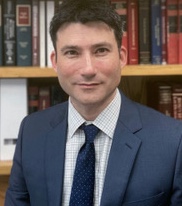 Seth Katsuya Endo, Vice Dean of Intellectual Life and Associate Professor of Law, Seattle University School of Law
Seth Katsuya Endo’s scholarship and teaching primarily focus on civil procedure and professional responsibility. Prior to joining the Seattle University School of Law, he taught at the University of Florida Levin College of Law and in the Lawyering Program at NYU School of Law. His practice experience includes time at Cleary Gottlieb Steen & Hamilton LLP and Demos. Professor Endo also clerked for several judges, including the Honorable Rosemary Barkett, then-Circuit Judge of the United States Court of Appeals for the Eleventh Circuit. He received his B.A. from the University of Chicago and his J.D. from NYU School of Law.
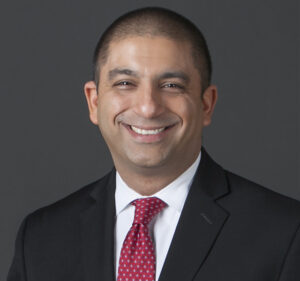 Jamil N. Jaffer,
Founder & Executive Director, National Security Institute and Assistant Professor of Law & Director, National Security Law & Policy Program, George Mason University Antonin Scalia Law School
Jamil N. Jaffer currently serves as Founder and Executive Director of the National Security Institute and as an Assistant Professor of Law and Director of the National Security Law & Policy Program at the Antonin Scalia Law School at George Mason University, where he teaches classes on counterterrorism, intelligence, surveillance, cybersecurity, and other national security matters, as well as a summer course in Padua, Italy with U.S. Supreme Court Justice Neil M. Gorsuch. Jamil is also affiliated with Stanford University’s Center for International Security and Cooperation and previously served as a Visiting Fellow at the Hoover Institution from 2016 – 2019.
 Donald J. Kochan,
Professor of Law and Executive Director, Law & Economics Center, George Mason University Antonin Scalia Law School
Donald J. Kochan is Professor of Law and Executive Director of the Law & Economics Center (LEC). Professor Kochan’s scholarship focuses on areas of property law, constitutional law, administrative law, natural resources and environmental law, tort law, and law & economics.
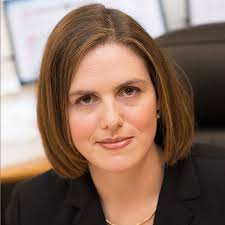 Maya Steinitz,
Professor of Law and R. Gordon Butler Scholar in International Law, Boston University School of Law
Professor Maya Steinitz teaches civil procedure, international arbitration, international business transactions and corporations. Her research focuses on a wide range of topics including the intersection of civil litigation and corporate law, public and business international law, transnational dispute resolution, and the global legal profession. She is one of the nation’s leading experts on litigation finance.
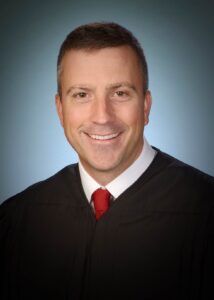 The Honorable Trevor N. McFadden, Moderator
Judge, US District Court for the District of Columbia
***
More on the issue. . . .
With TPLF, third party litigation financiers “invest” in lawsuits with an expected return on their investment by getting a cut of any judgment award or settlement received by their funded plaintiff. Sophisticated funders develop diverse portfolios of litigation so that they can assess and spread risk based on the probabilities of winning or achieving favorable settlements.
Some argue that this mechanism gives aggrieved parties access to court that they would otherwise lack because they would not have funds to bring litigation to recover for their losses against responsible defendants. Some worry that it leads to a flood of litigation that should never be brought in the first place and may skew normal incentives to settle because of funder control. A serious debate is occurring between commentators, in state legislatures and Congress, and in the courts over whether there should be requirements to disclose the existence and source of third party financing in particular cases. In most state and federal courts, disclosure is not yet required, clouding the ability to assess potential conflicts of interest and meaning courts are not operating on full information when deciding things like proportionality in discovery which is often based on a determination of the resources available to the parties. These issues and more will be discussed at the LEC luncheon panel.
Review the scholarly papers produced from the Henry G. Manne Program in Law & Economics Studies October 2024 Third Party Litigation Financing Research Roundtable
* * *
Watch Previous LEC Panels on TPLF
Eighteenth Annual Judicial Symposium on Civil Justice Issues
Third Party Litigation Financing: What Effects on the Civil Justice System?
Monday, October 7, 2024
Third Party Litigation Financing: The Role of Disclosure and the Judicial Role
Tuesday, October 8 2024
Civil Justice Academy Webinars
The Economics of Law Firm Ownership: Should There be Limits on Who Can Own Law Firms?
Friday, October 20, 2023
Update on the Debate Over Third Party Litigation Finance
Friday, June 16, 2023